Our monthly newsletter is now online with updates on the Joe Louis Greenway, I-375 replacement, Bikes 4 Employees and much more.

 Detroit Greenways Coalition
Our monthly newsletter is now online with updates on the Joe Louis Greenway, I-375 replacement, Bikes 4 Employees and much more.

Below are our comments on the draft MDOT 2024-208 Five-Year Transportation Plan. You can submit your own comments before September 8th, 2023.
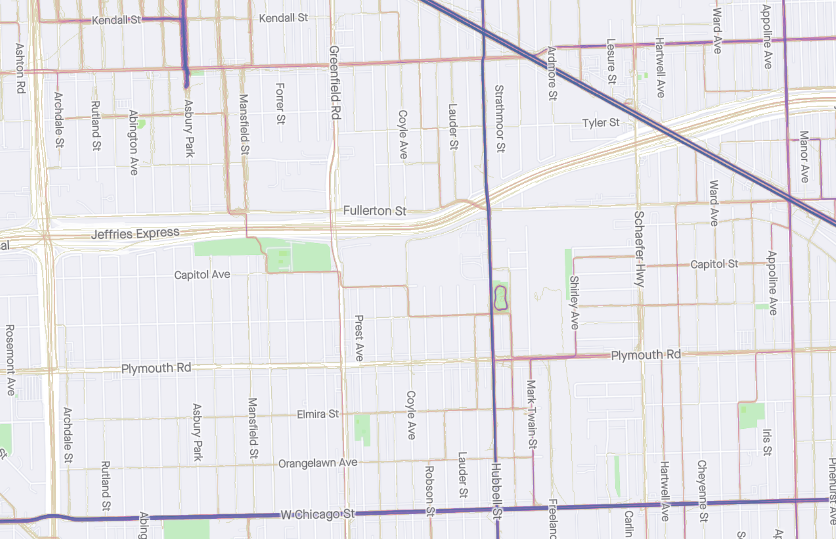
At first glance, it appeared this five-year plan removed prior MDOT commitments for the Iron Belle Trail/Conner Creek Greenway bridge over I-94. After conversations with the City of Detroit and MDOT, we learned that it wasn’t removed. It was no longer individually identified and had been wrapped into another I-94 phase line item. This is confusing. We ask that MDOT consistently list projects for each five-year plan so the public can more accurately determine what changes exist or do not exist.

The following document was sent to M-DOT on August 10th, 2023. On September 14th we had a productive meeting with MDOT and the City of Detroit to review these concerns and suggestions:
While we generally support a planned alternative to I-375, the design alternative (April 2023) has significant safety and connectivity concerns for bicyclists and pedestrians. Except for the cycletracks and some new sidewalks, this project does not reconnect the community as currently designed. The boulevard and intersections prioritize vehicle mobility similar to other major MDOT roads like Telegraph — a road that disconnects the community.
The boulevard with its wide roadways, sweeping curves, and overly-large intersections isn’t designed as an urban arterial. We believe this will encourage motorists exiting I-75 to maintain high travel speeds, especially north of Gratiot. Higher speeds result in more bicycle/pedestrian crashes with increased severity.
There also seems that reductions in vehicle commuting to Downtown post-COVID presents an opportunity to downsize and narrow roadways and intersections.
With today’s I-375, bicyclists and pedestrians avoid conflict with the below-grade vehicle traffic. Bringing this traffic to grade increases pedestrian and bicyclist conflicts with vehicles. The additional ad-grade vehicle traffic also leads to wider crosswalks and more pedestrian/bicyclist delay, both of which negatively impact connectivity and walkability.
We’ve outlined specific concerns and suggested solutions below.
The intersection design is not safe for bicyclists or pedestrians given its slip lanes and high-volume conflict areas. It’s not appropriate for an urban setting. We are especially concerned for bicyclists and pedestrians using the cycletrack and sidewalks when traveling north and south across Gratiot.
We expect the WB Gratiot to NB boulevard slip lanes will become an uncontrolled turning movement even with a No Turn on Red. If vehicles stop, they will likely not be looking for southbound cycletrack/sidewalk traffic. Having two lanes creates a highly unsafe multi-threat situation. Large vehicles in one lane can block sight lines for seeing vehicles in adjacent lanes. There is also a high likelihood that vehicles will block the cycletrack/crosswalk.
To address these concerns:
The dual right turn lanes from WB E. Lafayette to the NB boulevard are a major concern for reasons similar to those mentioned above: vehicles will not stop, motorists will not look for southbound traffic, the cycletrack and crosswalk will get blocked, and the multi-threat concerns. In addition, very few bicyclists will find it safe traveling with two lanes away from the curb and with no physical separation from vehicles on both sides.
Also, we see no need for E. Lafayette to grow from its existing 4 lanes east of the boulevard to 7 lanes. This makes the intersection notably larger and less safe for those crossing it on foot or by bike. Larned suffers from the same design bloat.
It is imperative that every intersection is designed to prioritize pedestrian and bicyclist safety. To address this:

We appreciate seeing sidewalks added along all non-freeway streets. However, the sidewalk within the median north of Gratiot could be a very unpleasant place to walk.
The boulevard and Montcalm cycletracks should mimic the Hudson River Greenway design in NYC.
One operational concern we have with the Montcalm cycletrack is on its west end. This area around the stadiums is often closed or restricted for bicycle use. We would like to see a city policy that keeps this bicycling connection open while also addressing any stadium safety issues.
This is an opportunity to add and improve other bike lanes within the project footprint..
The design appears to free up significant land between Eastern Market, Brush, and Crain’s. We would like to see this become green space that can manage stormwater from these surrounding properties. A walking/biking trail through this area (with access off of Montcalm) would be an ideal addition.
Additional clusters of trees (and not simply street trees) should be planted throughout the project to not only address stormwater, but reduce noise and air pollution for the surrounding community.

We made the I-375 replacement part of our successful pitch to get the Association of Pedestrian and Bicycling Professionals Conference in 2024. This project will certainly be on the agenda and we want to make sure we can talk about it in a positive way. By incorporating the changes we’re proposing, it can be

The below comments on the Belle Isle Mobility Plan draft were submitted to the DNR on July 24, 2023:
While we attended the video presentation (and have since rewatched it many times), we don’t feel we have enough information to fully weigh in on the changes proposed in the mobility study. We still have many design questions that prevent us from offering our full support at this time. However, there’s quite a bit that we do like and there are opportunities to make further improvements –
10-foot vehicle travel lanes – We would like the plan to consistently use 10’ travel lanes. This will reduce speeding without other negative safety impacts.
Cycletrack on MacArthur Bridge – We like this design as it provides separation from the vehicle traffic. We also ask that:
Outer roads – We support the one-way to two-way conversions to improve safety, but think there’s still some opportunity for improvement. We think this will reduce the Vehicles Miles Traveled on the island, which is a benefit to those walking and biking, as well as teh environment. We do support the separated bike lane traveling clockwise around the island.
Other roads – We generally find these roads to be less of a concern for bicyclists compared.
Bike lane maintenance – We want to see that the DNR and/or MDOT is committed to a maintenance plan for all of the bike lanes. Too often we’ve seen separated bike lanes suffer from a lack of maintenance, resulting in debris and stormwater collecting at the curb.
Stormwater Management – We support adding infrastructure and trees that naturally manage stormwater. We also find that removing pavement and other impervious surfaces is an even simpler solution that should be considered in all mobility designs. It seems that this plan adds to the island’s total impervious surface area, which is a concern.
Belle Isle’s Bicycle Heritage – There is a unique opportunity to celebrate the island’s bicycle heritage, especially with the Bicycle Pavillion. Bicyclists were riding on the island well before the first car was ever driven in Detroit. There were many prominent bicycle events on the island from major races in the 1890s to the Wolverine 200 ride. We would like to see how this connection between history and mobility could be included within the plan.


Unlike previous years, we don’t have a formal event planned for Friday, May 19th, 2023 – Bike to Everywhere Day.
Since COVID and the corresponding reduction in work commutes, we’ve switched up the former Bike to Work Day ride into a day for riding everywhere rather than driving. That’s still the case this year. Unfortunately we don’t have socks to giveaway this year.
Please tag us (@DetroitGreeway) if you post a photo or video this Friday on Twitter or Instagram.
However, we are distributing free bikes on Friday, though they’re not for everyone. They’re for our Bikes 4 Employees program participants.
B4E is a program of the Detroit Greenways Coalition. Partnering employers in 2023 who recruit bike applicants from among their employees or clients include the City of Detroit’s Blight Remediation Division of GSD, Development Centers, Flex-N-Gate, The Greening of Detroit, Henry Ford Health, Live6 Alliance, Matrix Human Services, Wayne Metropolitan, and Wayne State University. Program funders include Flex-N-Gate, Henry Ford Health, Matrix Human Services, and the United Way of Southeast Michigan. Product donations and discounts have been offered by Detroit Bikes, Kali Protectives, Kryptonite, and Trek.
Bike recipients receive new high-quality bicycles and helmets, lights, locks, reflective vests, and bike pumps. The bikes are outfitted with fenders and rear racks with clip-on packs for carrying loads.
Look for coming exciting announcements about the expansion of this program later this year.

MoGo has partnered with Avalon Bakery for free small coffees to those with MoGo passes this Friday (from opening to 10am) at their three locations: